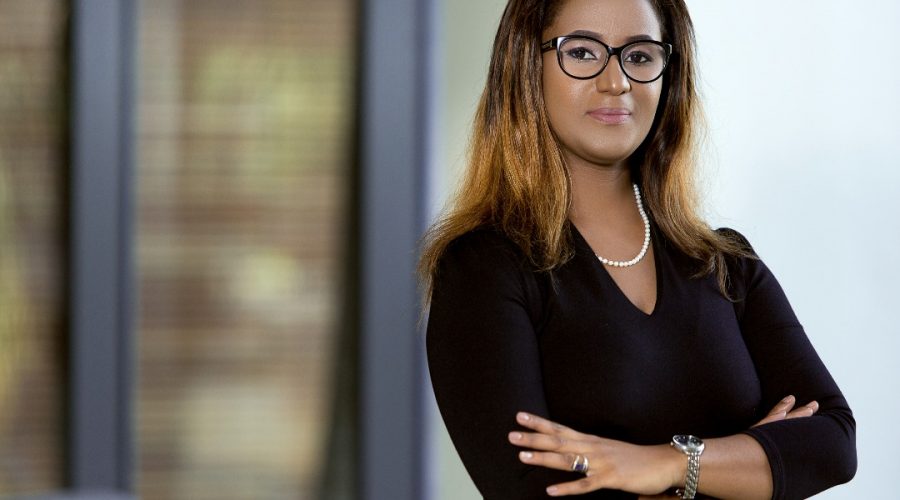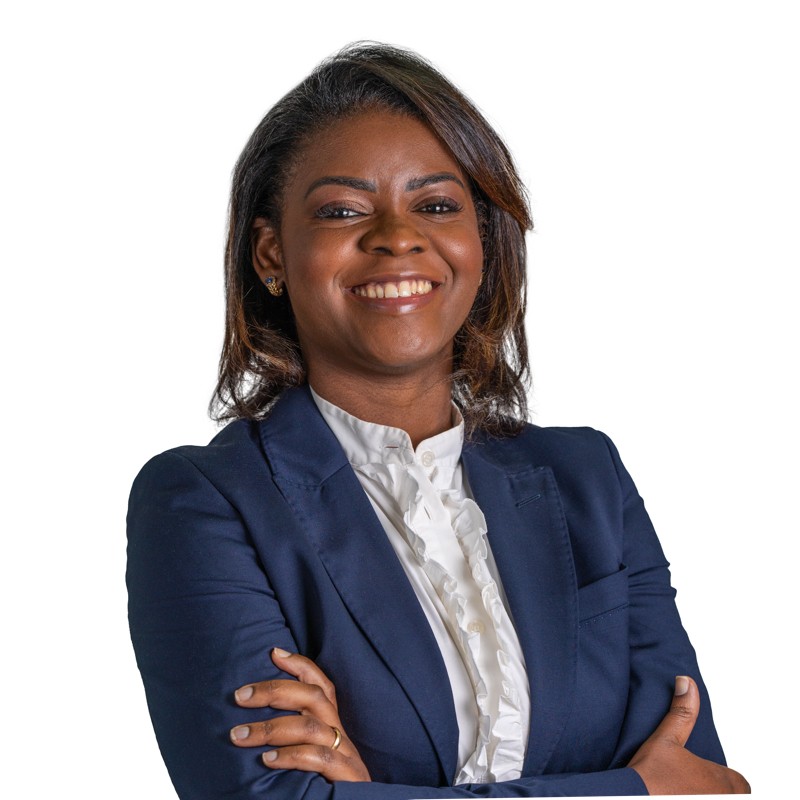
Name of arbitrator practitioner:
Itweva Nogueira
Education, awards:
- LLB in Law from Law School- University of Oporto;
- Masters in Law from the School of Law of Catholics University – Oporto;
- LLM in International Commercial Law – Brunel University of London;
- Post-Graduation in Agribusiness – ISEG/Academia BAI.
Countries qualified to practice:
Angola
Languages:
- Portuguese
- English
Name of law firm:
Dentons LEAD
Areas of specialisation:
Corporate, Oil and Gas, IP
Institutional affiliation(s):
- OAA
- Africa Arbitration Academy
- ICC YAF
What influenced your interest in arbitration?
My LLM studies; I had a module that was on investment arbitration and because I am from a country that has many FDIs, I saw an opportunity to position myself in the Angolan Market.
What are some of the challenges faced by young practitioners working on disputes in Africa? What do you think can be done to address these challenges?
Definitely the access to the practice. Because the amounts in discussion are so high, clients are very reluctant to give opportunities to younger practitioners. Additionally, the fact that Arbitration is a private stance for dispute resolution, the practice goes unknown for many lawyers.
Given that Africa has 8 of the world’s 15 fastest growing economies and there is huge demand on the continent for clean, sustainable and innovative investment, how can African countries improve their investment climates, particularly after the economic recession caused by the Covid-19 pandemic?
Africa needs to combine its investments in the oil industry with the concerns of climate change. While the Northern continents are now focusing on green energies, and have been investing in it for several years, we are now looking to more ways of investment in products that some consumers won’t buy.
How has the Covid-19 pandemic impacted conducting arbitration in Angola, and is virtual hearing embraced by parties and practitioners in the country?
Angola is adapting to the same forms of conducting procedures as the rest of the world and virtual hearings are taking place, whenever is possible.
Do you have any mentors in the field of arbitration? What impact have they had on your career?
Yes, I have. Two years ago, I took part in a mentoring programme and my mentor was Ms. Funke Adekoya. As a friend told me at the time: “Itweva, in terms of arbitration in Africa, you got the best”. And it is true.
I also follow very closely the work of other practitioners as Nathan Searle, Professor Emilia Onyema and in Angola, Professor Lino Diamvutu.
What advice do you have for other young arbitration practitioners?
I have to say that you should just use the internet wisely. If you do your own researches, many opportunities will flourish in front of you and at some point you will need to start picking and choose which to attend, because there are so many things being done.
We have many ways to learn, from trainings, conferences and mentorship. And now, with social distancing it is easier and cheaper.