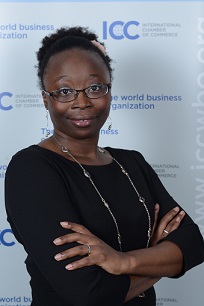
Name of arbitrator practitioner:
Diamana Diawara
Education and selected publications:
Education:
- Masters degree at Paris 1 Sorbonne and Paris Nanterre University
- LLM at Golden University, San Francisco (California)
Publication:
The “Africanisation” of International Arbitration, Andrea Carlevaris, Diamana Diawara, & Tunde Ogunseitan, TDM special issue on Africa (2016)
Countries qualified to practice:
N/A
Language(s):
- Soninké
- Bambara
- French
- English
- Spanish
Name of law firm or institution:
ICC International Court of arbitration
Area(s) of specialisation:
International arbitration / Private international law (Construction, Energy, Oil&Gas, M&A, Distribution…)
Institutional affiliation(s):
- IBA arb40 steering Committee
- OHADA Group of the Comité Français de l’Arbitrage
- AfricArb (founding member)
- ICC Young Arbitrators Forum (YAF)
What influenced your interest in arbitration?
During my studies, I was very passionate about private international law and was even initially gearing towards a post-doctorate in that field of law. After studying arbitration for a semester during my masters degree at Paris 1 Sorbonne University, it became clear to me that arbitration was an excellent way to practice both procedural law combined with general substantive law while dealing with transactions of the international business. I then took part in the Willem C. Vis Moot competition as a student and got permanently ‘hooked’ on arbitration, thus deciding to make it the focus of my career.
As a Counsel at the ICC International Court of Arbitration, how will you rate the development of arbitration in Africa?
Seven years ago, when I first started as a deputy counsel at the ICC (in the same team that I am now heading), arbitration in Africa was already fast developing. At that time, I was stricken by the fact that African parties were (almost) always participating as defendants in the procedures and were often States or State entities. In addition, very few African counsel or arbitrators were involved in the cases I was managing.
Nowadays, things have clearly changed and new trends are developing although the above remains true to a large extent. I am particularly impressed to see that:
- African parties have taken the driver’s seat in many cases and are positioning themselves as claimants, which shows clear adherence on their part to international arbitration as a ‘normal’ way to resolve international business disputes;
- African parties involved in ICC arbitrations are not only States but also players from the private sector;
- An increasing number of African counsel are involved in the cases;
- After a lot of efforts from the institution, to which I was lucky to contribute, an increasing number of African practitioners are sitting as arbitrators in ICC cases.
How effective is the regime for enforcing arbitral awards in Francophone Africa?
Experience has shown that ICC arbitral awards that were submitted to the control of African judges have been mostly positively received before the courts of the OHADA member states. This is I believe is thanks to the following two factors:
- Most countries are signatories to the New York convention
- The OHADA has enacted a uniform arbitration act which allows enhanced awareness among the judges as to the test to be applied in order to assess the validity of an arbitral award.
I would add to that, the fact that there is an increasing interest and awareness among African legal practitioners when it comes to arbitration which necessarily creates a favourable climate when awards are being examined by the judiciary.
Do you have any mentors in the field of arbitration? What impact have they had on your career?
It is an impossible task to single out one person as having influenced my career more than others. I was lucky enough during my trainings but also through my readings, to be guided and to learn from very bright jurists. I would however say that I am grateful to have had the opportunity to work for Carl Salans (founding partner of the law firm, Salans in Paris) which has now merged with Dentons. Mr Salans is not only a very bright lawyer but also a man who has always spread a very positive and conciliatory spirit in his approach to resolving disputes- a spirit that I do aspire to develop and maintain in my career.
What advice do you have for other young arbitration practitioners?
“All roads lead to Rome” as the proverb says. Many would tell the young practitioners that they “have” to tick such and such box in their CVs in order to accede to the arbitration field. My experience at the ICC has taught me that there are as many different ways (and profiles) to become an arbitration practitioner as there are business disputes to be solved. No age, no origin and no gender should ever be a barrier to ones aspiration to practice arbitration.