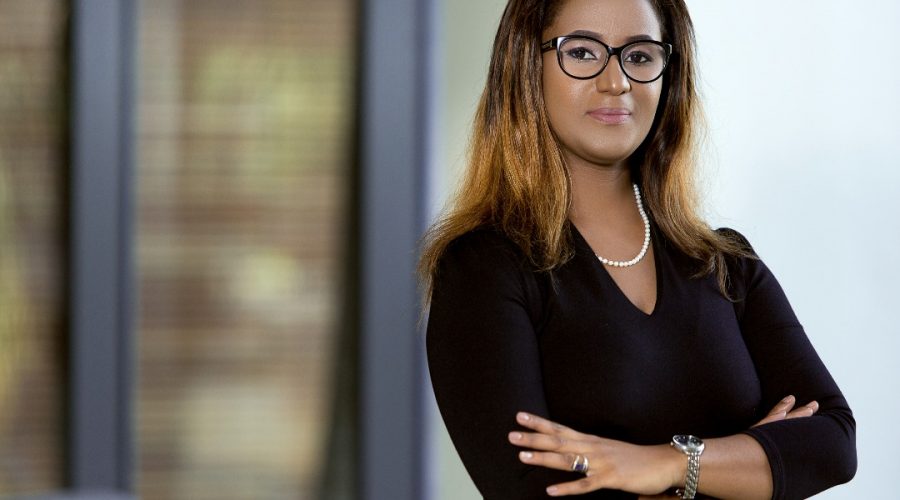
Name of arbitrator practitioner:
Nania Owusu-Ankomah Sackey
Education, Awards:
Education:
- Ghana School of Law (Qualifying Law Certificate).
- The College of Law, now University of Law, London. (PgDip- Bar Vocational Course) – Awarded an Outstanding.
- University of Leeds (LLM) – Awarded a Merit.
- University of Ghana (B.A (Hons) in Political Science and Philosophy) –First Class Honours.
Awards:
- Awarded a Certificate of Honour by The Honourable Society of the Middle Temple (2010).
- Awarded the Ford and Warren Prize for the Most Meritorious Student on the LLM by the University of Leeds (2009).
Countries qualified to practise:
- Ghana
- England and Wales
Language(s):
- English
- Twi
- Fante
- French (basic)
Name of law firm/institution:
Bentsi-Enchill, Letsa & Ankomah
Area(s) of specialisation:
- Finance related disputes
- Telecommunications
- Energy and Natural Resources
Institutional affiliation(s):
Various, including:
- Councillor, LCIA African Users’ Council
- Member, Chartered Institute of Arbitrators
- Member, African Arbitration Association
- Member, IBA Africa Arbitration Network
What influenced your interest in arbitration?
Arbitration was a natural progression from litigation. I love litigation but I was regularly frustrated by the delays in the court process and the difficulties encountered in enforcement. Clients’ businesses suffered in spite of victories in court because of long drawn-out court battles. Arbitration therefore became an attractive alternative, especially as my work increasingly became international in nature.
Arbitration allows me to do what I enjoy most with additional perks. I am able to use the skill sets acquired as a litigator to resolve disputes in a quicker and more efficient manner, using decision-makers that I participated in selecting while still providing binding decisions that could be enforced in several jurisdictions. The seduction of it all was impossible to resist.
I credit my firm, Bentsi-Enchill, Letsa and Ankomah, for sponsoring me to attend the Lex Mundi Cross-Border Dispute Resolution Programme some years ago where I became convinced that arbitration was the way for me. I also credit our Managing Partner, Mr. Ace Ankomah, who gave me the opportunity to work on some pivotal arbitration disputes that gave me exposure and deepened my conviction to focus on arbitration.
What are some of the challenges facing young arbitration practitioners working on disputes in Africa? What do you think can be done to address these challenges?
Experience and exposure are the primary challenges facing young arbitration practitioners working on disputes on the continent. A large volume of the arbitration disputes emanating from the continent are resolved outside the continent, which means that young arbitration practitioners have limited experience in dealing with certain types of disputes compared to their peers elsewhere. The limited experience also makes it difficult for them to build expertise in one particular area of arbitration.
In the short-term, it may be helpful for young practitioners to pursue secondment opportunities with international law firms to be able to gain exposure to certain types of work. In the long-term, we have to explore ways of seating arbitrations on the continent so that young practitioners can build their experience.
As an officer in the LCIA African Users’ Council, what do you think can facilitate the choice of African countries as preferred seats of arbitration?
It is unfortunate that majority of the disputes whose subject matter have strong African connections or have one/ both of the parties being African are not seated in African countries or cities. The reality however is that when choosing a seat, parties look out for four things: a) how best a country’s national legislation and the judiciary support arbitration, b) how effectively the legal system ensures limited court intervention in the arbitration process, c) the parameters and length of time for challenging or setting aside arbitration awards and d) the ease of enforcement of awards. It is only when African countries can demonstrate that they meet these criteria that parties will feel confident in choosing them as seats of arbitration. A few African countries have established themselves as reliable seats and I expect that this will translate into more arbitrations seated in those jurisdictions.
That being said, African practitioners who are involved in negotiating and drafting contracts must also make a conscious effort to negotiate for and choose African countries/cities to seat their arbitrations. I think that a combination of the two approaches, coupled with support from the major arbitration institutions, will provide a potent environment for disputes to be seated on the continent.
Do you have any mentors in the field of arbitration? What impact have they had on your career?
Nathan Searle is a high achieving individual who inspires me and has constantly given me valuable advice on how to build my career and get to the next level. I have had the opportunity to work with him and I am inspired by his leadership style and strong work ethic. He has been a strong advocate for me and opened up a number of opportunities for me. I am fortunate and grateful to have connected with him and for the instrumental role he has played in shaping my arbitration career. I have a lot of respect for him, even more so because he is relatively young and yet highly accomplished.
Gary Born is phenomenal and even more impressive in person. Apart from his intellect and skill, which we all admire, he is genuinely a pleasant person and is interested in shaping young talent on the African continent. He has such a generous spirit and has involved me in projects that have given me visibility and leverage. He also given me some of the best pieces of career advice.
From these two incredibly talented professionals, I have learnt the importance of using mentorship as a way of giving back and investing in building up other soon-to-be leaders in the field.
What advice do you have for other young arbitration practitioners?
Through my own journey, I have learnt three things: a) build your knowledge and profile; b) be visible; and c) be involved or participate.
Build your knowledge and profile, because you need a strong performance currency to succeed in any field. Learn and grow professionally and build a strong foundation, which in turn will build your confidence and help you overcome any imposter syndrome.
Be visible, because people will only give you work when they know you, they trust you and they like you. You can only be known, trusted and liked when you are visible. It is difficult for young practitioners to “put themselves out there” but an easy way to do this is through your LinkedIn profile, by publishing articles and by assisting on arbitration projects. It is simply not enough to be talented or to do great work. Others must get to know about it, especially in a field which mainly relies on reputation and word-of-mouth referrals.
Be involved or participate in the global arbitration community, because it is the only way you can connect with established practitioners and build strong relationships within the field. These relationships will open up opportunities for you, steer you in the right direction and boost your career.
Having said all that, don’t forget that everything takes time. Please don’t expect it to happen overnight and please don’t give up if it is taking longer than you would like it to.