Name of arbitrator:
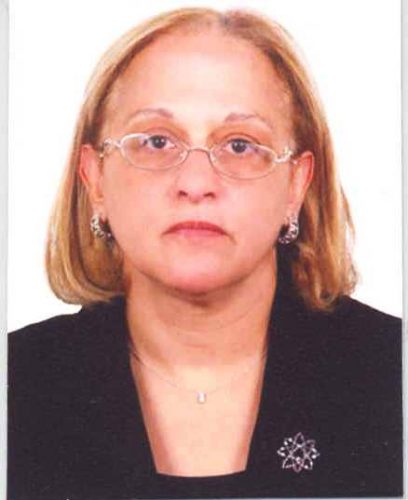
Sylvia Noury
Education, awards:
Education:
Cambridge University: Triple First Class Honours in Law
Awards:
Clive Parry Scholarship for Public International Law
Countries qualified to practice:
England & Wales
Language(s):
- English
- Spanish
- French
Name of law firm or institution:
Freshfields Bruckhaus Deringer LLP
Area(s) of specialisation:
International Arbitration and Public International Law.
Institutional affiliation(s):
- member of the ICC UK Arbitration Committee
- member of Arbitral Appointments sub-committee, ICC UK
- member of the Board of the Arbitration Institute of the Stockholm Chamber of Commerce
- member of the Advisory Board of the Institute for Transnational Arbitration
- member of BIICL, ICCA, IAI, LCIA.
Please provide a brief background of yourself and your experience working on disputes in Africa?
I have practised arbitration for two decades in the London, Paris and New York offices of Freshfields; a truly enriching experience working alongside incredibly talented colleagues and impressive clients on the most stimulating and challenging disputes before distinguished arbitral tribunals. The Argentine economic crisis in 2001 and my Spanish language skills thrust me to the forefront of the investment treaty arbitration boom (I was on the winning team in the cases of BG, CMS, National Grid and Total v Argentina), with treaty disputes against Bolivia, Ecuador and Venezuela following. After a decade focusing on Latin American disputes, I began to focus on Africa. Over the last decade, my clients in this space have included Anglo American, Bharti, MTN and the Government of Kenya as well as a number of IOCs such as BP, Chevron Eni and Tullow, with work across the continent, notably in Egypt, Ghana, Libya, Kenya, Nigeria, Uganda, Tanzania and South Africa. The rise of resource nationalism in Africa today raises similar issues to those I have grappled with in Latin America, while the people, culture and challenges involved in working across the African continent are of course unique.
You are co-chair of the Equal Representation in Arbitration Pledge – please tell us a bit about this initiative and how it can help to improve gender diverse arbitration appointments in Africa?
The Pledge is a global initiative aimed at addressing the under-representation of women sitting as arbitrators. The Pledge has two objectives: (i) to improve the profile and representation of women in international arbitration; and (ii) to increase the appointment of women on arbitral tribunals on an equal opportunity basis. When the Pledge was first conceived, the best available data estimated that female appointees to arbitral tribunals were a woeful 10%. Since the official launch of the Pledge in May 2016, we have gathered 3,650 signatories from over 110 countries, including nearly 700 organisations, among them nearly all of the major arbitral institutions and law firms, as well as some of the major corporates. Our success in implementing the objectives of the Pledge has been measurable. In terms of our key objective, today, most of the major arbitral institutions publish diversity statistics in terms of arbitral appointments (many as a direct result of signing the Pledge) and the figures are moving in the right direction. Several institutions reported over 20% female appointments for their 2018 caseload, including 23% at the LCIA, 24% at ICSID and 27% at the SCC, significant increases from the numbers reported in previous years. In this our fourth year, we are focusing on harnessing more support from corporate clients, as well as expanding regionally, particularly in Africa. So far, some 10% of our signatories are African. This month, we are launching an African Sub-Committee of the Pledge, comprised of 25 members from 16 African nations, with a mandate to increase the profile of female African arbitrators and improve gender diverse arbitration appointments in Africa. The African Sub-Committee will be working closely with some of the impressive organisations already active in the arbitration community in Africa, such as Africa Arbitration, to achieve this goal.
What advice do you have for young practitioners who see you as their role model?
Seize every chance to both challenge and distinguish yourself. Don’t wait for opportunities to come to you – while fate will inevitably play a part, your future is in your own hands. Be true to yourself, play to your strengths and don’t try to be something or someone you are not.